 My signatures are funny things. For instance I have four scribbles I call a signature. I have my initials scribble, my ‘Andrew’ scribble, my general letter scribble and my bank scribble. The picture scribble is none of the above, but they are all different, all unreadable, but all my mark.
The use of signatures date back thousands of years. They are my mark, a thing that identifies me. In the flick of a pen I acknowledge my agreement, my commitment, my obligation.
Today, I was thinking as I signed a new large contract we won recently, how most people sign very few things. Signing letters has been replaced with email, or txt, or verbal. Signing cheques replaced with pin numbers and credit cards.
Personally, when I sign a document, I make sure I am comfortable with my obligations and commitment, because it is ‘in writing’.
Yet my verbal commitment should always be just as strong as my signed commitment. My word should carry the same weight as my mark.
Category: Business Startups NZ (Page 3 of 4)
 Agora’s story is being formed one drop, one cup of coffee at a time.
Yesterday I sat at Agora drinking a wonderful coffee made by the infamous Simon, and over heard a customer tell her two friends great things about the café, about how we give 50cents from each cup of coffee to charity.
There is nothing quite so satisfying as having one of our customers tell the story for us.
As I left the café I remembered the conversations we had as trustees about story. I remembered how one idea developed into another. I remembered how we want agora to make an impact on our community and have a story.
As I left the café, I also thought about my story, about the story of my family, my business, my friends. Those stories, like Agora’s, are a working in progress.
Like a great coffee brewing, one drop at a time, story is very powerful.
[181 | 365 ‘Coffee Stories’ a shot of a shot of coffee brewing, one drop at a time at café agora]
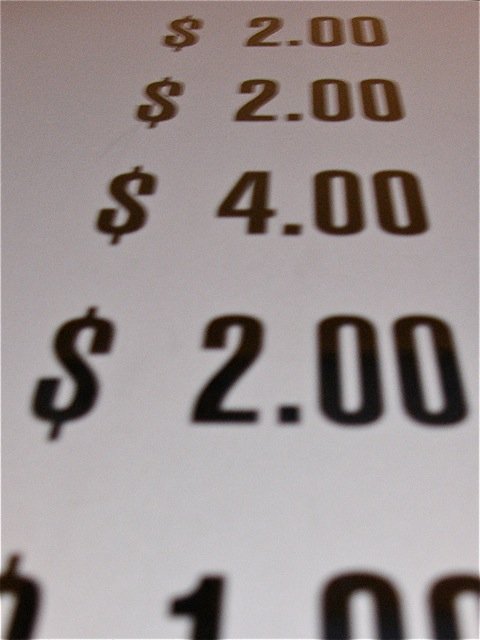 Numbers are a strange part of our business and society. Even if you’re not a ‘numbers person’ and hated math, you generally spend a significant amount of time dealing with numbers. When a baby is born the question straight after their name and sex is generally, ‘how heavy?’
From then on numbers are the measure of growth, of development, of test scores, of financial stability, of success. Business is judged by numbers, evangelists record salvations by numbers, churches measure growth by numbers.
And yet.
It is almost impossible to truly measure the must important things by numbers. Good Marriages. Personal growth. Spiritual transformation. Or even happiness.
And yet.
We continue to measure by numbers.
[Numbers – Today was a day of numbers, of forecasting the next financial year, like I really have a clue. Will it be 1 or 2 or 4 or 2 or 2? Shot was taken at agora last night]
There I was waiting. Killing time, hanging around for my appointed time at the doctors. Having parked myself on a padded bench seat not much more comfortable than an old church pew I search for something to read.
I flick through a readers Digest (June 2007) and discover an article about the most trust New Zealanders and Brands.
Top Brand is Cadbury, which is interesting because unlike Whitakers they don’t make “good honest chocolate”. In the bottom slot at number 25 was Palmolive. A couple brands of interest to me are New Zealand Post at #14 (a number I am sure they would like to improve), and Farmers at #24 (which actually really surprises me given their history).
Anyway the #1 most trusted person in NZ in June 2007 was …#1 Sir Ed (No surprise). He rates above Sir Peter Snell (#4), Queen Elizabeth (#19), Sam Morgan (#30), Helen Clarke (#58 ironically the most trust politician), Matthew Ridge (#71).
Now of the 75 people who were on the list, who do you think is at number #75? None other than Bishop Brian Tamaki.
Yip.
Want to say more but wont.
Makes you think a little about what it is that make people trust you or your brand.
I think words like consistent, authentic, connected, reliable and considerate would come to most people’s minds.
These are words that normal kiwi’s don’t associate with politicians or Palmolive or Brian Tamaki.
I am sure they all think they are trustworthy its just people don’t believe them.
If people don't believe your message. They dont trust you.
Bessemer Venture Partners is perhaps one of America's oldest venture capital firm, carrying on an unbroken practice of venture capital investing that stretches back to 1911.
They have a "Anti-Portfolio" section on their website discussing some of the names they have passed on in the Venture Capital stage. Just small names like Apple, eBay, Fedex, Google to name a few.
Check it out here, its mind blowing to think about how much money they missed out on.
[Hat tip: Idealog]
Mainfreight today announced that they have conditionally sold Pan Orient Project Logistics business and its 75% interest in LEP (New Zealand and Australia) to global logistics company Agility Group for A$83 million. It is the last of the non core Owens businesses to be sold. The funds released from the sale will be used by Mainfreight to fund its ongoing international expansion.
With Mainfreight, Freightways and others slowly establishing significant off shore businesses I wonder what a successful strategy would be for more NZ companies to do the same?
The road to overseas subsidiaries it would seem is littered with more stories of failure than success. Air NZ and Ansett, Telecom and AAPT (yet to see the end of this movie) are examples of huge companies struggling to make it happen. How then is it possible for a NZ company to stem the tide of Aussie investment and head into their backyard? What are the key points to consider?
#1 It is harder than you think.
Summed up well by Josef Roberts who launched Red Bull in the two countries. "Don't rush overseas. Australia might have five times the population, but it also has five times the competition, and Kiwis aren't used to dealing with Australian bureaucracy. Roberts worked out a worst-case scenario, and then doubled the cost and doubled the time. "We were about right," he says. "It took three times as long and was three times as expensive." [From Idealog "Meet the man who gave Red Bull wings"]

#2 You need to avoid the Valley of Death
Rod Drury wrote about the Valley of Death "From New Zealand, once you have saturated the local market, you then have a massive transformational change to address another market. You may need to introduce capital, add new staff, learn foreign rules – the list goes on. For us to take almost our first step of expansion, to enter only our second market – we bet our businesses. I'm calling this – the Valley of Death."
#3 You need to take your time.
This would be the key lesson I have gleamed from companies like Mainfreight, Freightways or even Michael Hill who have set-up in Australia. They seem to make slow educated decisions about their growth into other countries. They take the time to understand the markets, people, culture and regulations and they take small incremental steps. They have done this well and don't bet the NZ business on it.
I don't have much first hand experience. Hopefully one day I will, but in the meantime I am interested in your thoughts.
Just one person in any one company can make it or blow it. One person can sent you away feeling like the most important person in the world or make you feel like they don’t value your business.
Yesterday Alf & I were flying to Christchurch for the day. We had a heap to discuss prior to getting their so I left Hamilton on the 6am flight to Auckland to connect with the 6:50 flight to Christchurch. Alf was on this flight joining me in Auckland and I had preallocated a seat for him next to me, because we were checking-in in different cities.
My Hamilton flight always gets in after the Christchurch Flight is boarding and I am one of the last on the plane. I get onboard and some other guy is in the seat next to me! So texting Alf I find out he is in 17d. I explain to the cabin assistant Alf had been preallocated into the seat next to me, and could me be moved into the seat opposite. He said he will check with the Captain and while he is doing that some other guy comes from the back and sits in that seat.
Now the cabin assistant has a choice. Does he try to make something work, or just walk away. There are after all spare seats in row 2 behind me, and I’m sure one of them wouldn’t mind moving forward to row 1. He can help me or bug the snot out of me and do nothing.
He does nothing and says nothing further.
Alf and I missed out on really quality time together that we will never again enjoy 🙁 (secretly I think alf planned it to get some sleep) and we arrived in Christchurch less prepared than we should have.
Oh, the airline was Air NZ, not that this is a surprise because there is no other alternative for me out of Hamilton.
It all comes down to one person. How often does one person blow it in agoge and we don’t know or care? How often do I blow it?
Oh one last point. The guy sitting next to me heard all of this. He could have offered to move to the seat opposite (before the other guy came up), and been closer to the door, and had more leg room. Personally I would have offered to do that. But he said nothing and in a funny way I feel sorry for that guy.

Last Thursday agoge received a place in the Deloitte Fast 50. This is a competition to establish the 50 fastest growing companies in New Zealand. Well after I duffed the speech and we went out to dinner to celebrate, I got to reflecting on what got us there. Here are some of my less than insightful observations:
My Team – The average age of my team is 30 and I am privileged to have the people I have. We are growing and learning and trying things together. We have an incredible culture, a heap of fun and seek to live "people matter" in everything we do. As Tim Finn says in his song "We had no idea, that it couldn't be done. And we needed to find, a like minded someone" I have found those someones in my team. The lesson: People are more important than anything else!
A lucky idea? – I had (and still do) have a heap of business ideas. I choose to launch under Logistics Personnel because it was the idea that I thought offered the quickest growth and good cashflow. A heap of the other ideas would have been a disaster. I did it after taking a week off work and surveying potential customers, researching the market size, blah blah. The lesson: Choose the right idea, an idea that will actually sell.
Cashflow – I started the company with around $60k cash and we have grown the business to almost $10m in annual revenues in 3 years. We could not have done it without strong cashflow. Seth Godin had a post the other day that gave 10 secrets of the marketing process. "#1. Don't run out of money. It always takes longer and costs more than you expect to spread your idea. You can budget for it or you can fail." – He's right and I often use the saying "Profit is a concept, cash is a fact".
We have had extended periods of making losses in the past as we invested in the future. We could only do this because we have strong cashflow. We work hard on rapid debt collection (65% in 17 days) based on the principal that the money belongs to us once it is billed. It sounds a little arrogant but a heap of small business just let other companies use them as a bank. We are not a bank! The lesson: You must have strong cashflow! You will only run out of cash once.
It is genuinely a privilege to be in the Fast 50. I am not sure we will make it next year, getting 200% growth year on year gets more and more difficult as you get more and more millions in revenue. I am not too worried if we don't but I know one thing for certain, we will have a heap of fun trying.
I read an interesting Scott Adams post today. In it he waxes lyrically for what feels like a day about all of his successes. Finally towards the end of what appears to be self-inflated dribble, he writes "To put all of this in context, and before you start to vomit at my bragging, I must confess that I fail miserably about ten times for every one success. (That's an accurate estimate. I've literally kept score.) But interestingly, the failures always involved activities that seemed entirely feasible. I was completely qualified for all of the things that failed."
He fails 90% of the time. Interestingly enough failing 90% of the time is only an issue if your goals are set to low. If you have huge goals and only get 10% of them, you become a huge success.
If you have small goals and only get 10% of them what do you get?
Few successful start-ups become great companies, in large part because they respond to the growth and success in the wrong way. They grow exponentially and attract a team of people that love growth and have an entrepreneurial spirit. After a while the lack of planning and systems and good hiring of some systematic people means the company can turn into a very disorganised company. The response is often to bring in veteran managers to rein in the mess.
“They create order out of the chaos, but the also kill the entrepreneurial spirit. Members of the founding team begin to grumble, 'This isn’t fun anymore. I used to be able to just get things done. Now I have to fill out these stupid forms and follow these stupid rules. Worst of all, I have to spend a horrendous amount of time in useless meetings.' The creative magic begins to wane as some of the most innovative people leave, disgusted by the bureaucracy and hierarchy. The exciting start-up transforms into just another company, with nothing special to recommend it. The cancer of mediocrity begins to grow in earnest.”
Most companies build their rules and processes to manage the small percentage of wrong people, which in turn drives the right people away. Getting the entrepreneurial spirit back it would seem means you need to give more freedom to your people.
Agree, disagree, have a question? – Post a comment now.