Lead a vivid life that does good

Category: People Matter (Page 5 of 9)

Creating a personal strategy to help you achieve your dream and goals.

GoalsOne of the funny things about returning from annual leave is that I often have this utopic desire to live a more purposeful life. I guess the relaxation, uninterrupted time with family and the space to think, lead me to want to create more of those spaces in my normal life.

Recently after returning from leave I realised that in our business we have strategies to move us towards our vision and these strategies help us choose the right actions.

In my personal life however, I had never put strategies in place and this needed to change.

Understanding the difference between vision and strategy and actions can be difficult so here is a personal example.

  • Vision is your dream or long-term goals. One of my visions is to “be a person of influence” (hopefully a positive one).
  • Strategy is a high level way of getting to your vision. My current strategies for increasing influence are “connecting with 4 people each week” and “writing weekly”.
  • Actions are the things you do each week to get that align to your strategy. My actions are appointments I have with people and time I actually spend writing.

The truth is I haven’t written each week and I haven’t met with 4 people each week. But, I have written more and connected with more people each week. I also track how I am going in my personal weekly check list which I review in my weekly review (this is the key to not forgetting it).

And even though I don’t achieve it each week, my influence is growing, and I am meeting and connecting with more people, which is energizing me and making me a better person.

Most importantly each week is deliberately better than it would be without them.

So what will your strategies be?

If you would like to see my current strategies, I have posted them at outward.me.

We are all artists

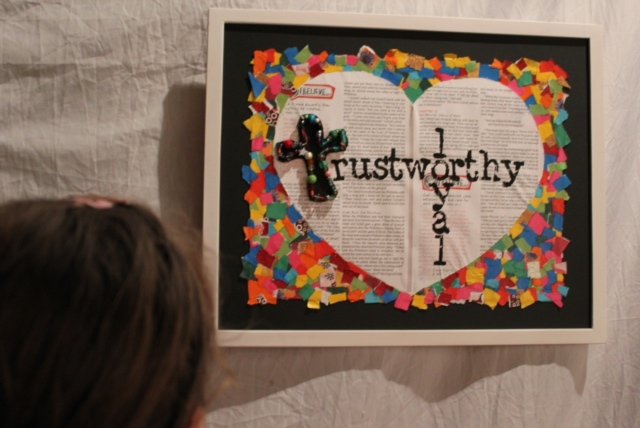
My 10 year old checking out her art at the HeART Expo. She is a true artist.

Recently I was sitting in a group of maybe 200 people who were asked if they were artists, and only four people raised their hand.

I was one of the four ‘artists’ who put their hand up. Can I paint or sculpt or dance? No, not at all. Yet I am an artist, because at the core of art is creativity.

An artist creates.

And almost everyone I have ever met is creative in someway. Sure, some paint and sculpt and dance, but most creative people, most artists I meet do nothing like that. Most create in other ways like taking home photos or cooking their favourite food. Some create by making practical things from metal or wood. Others create by raising amazing kids. Some even create using spreadsheets.

In my heart of hearts I believe we are all artists. I believe we are all created to create. And when we create, we should pause for a moment to enjoy our creation. Our Art.

You create things, therefore…

You are an artist.

Enjoy.

Learning to do

My daughters as a part of their reading development are both learning to infer the meaning of what the writer is saying. I guess inferring means reading between the lines to gain a better understanding.

Over the years I hope to teach them the importance of finding the implication of what the writer is saying. Not so they can search for the implication for everyone else, but so they learn to seek an implication of what they read to themselves.

Often as adults, we read to gain knowledge and readily see the implications to everyone but ourselves, but fail to make personal change.

So maybe now is the time to teach my daughters to read and infer and imply. And maybe now is the time to teach them to take action.

Then rather than having my kids learn to know.

They would learn to do.

4 tips for losing weight, quitting smoking and changing habits.

Our conversation was casual and jovial as we talked of my friend’s attempts to quit. Like all of us he had tried and failed on more than one occasion, except he was trying to give up smoking, an addiction I have never had to break.

As we chatted through the failed attempts of the past I said to him that he had never ‘resolved’ to give up. He had never really decided. He had not truly decided that he would never smoke again, and until he did all the quit smoking aids in the world would not help him.

He asked, as I would, “OK then, how do you get resolve?”

Around the same time another friend was losing weight (36kg in 6 months to be exact). He had lost weight before, he had tried and failed on more than one occasion, only this time something was different.

This time he has resolve.

I can hear it in his words. I can see it in his eyes; there is a steely-eyed determination to make this stick.

Resolve is different to self-discipline. Resolve is a determination and self-discipline is the habits that keep you on track.

Having been asked, “How do you get resolve?” my answer at the time was simple. I don’t know. I know when I have it, but I don’t know how to make people get it.

From my experience however the progression towards resolve goes a little something like this:

1) Know the Change.
If you don’t know you need to change you wont. Knowing an addiction or habit is bad is quite different from knowing it is incredibly bad for YOU.

2) Know the Future.
Maybe this is a specific goal like a target weight; maybe it’s knowing you will be a better leader by changing a habit. In any case you need to appreciate how the future you will be. Some could call this a goal, or a dream.

3) Know the Support.
Before you get resolve, somehow you need to know you have the people, tools or support to get you through. Giving up smoking if everyone around you smokes is almost impossible. Trying to lose weight without tracking what you eat, wont happen.

However, if you know you have supportive people, smoking patches, food diaries, whatever before you start, you are far more likely to succeed.

4) Now Decide.
Now the key to resolve is deciding. At some point you need to be by yourself, know change is needed, know what you want, know you have support and then decide.

Really decide.

No one can do this for you, and I wish I could tell you how to decide, but I cant.

I do know from personal experiences to lose weight, exercise regularly for the rest of my life, make decisions quicker, reduce debt or lead better, that it takes full resolve to get through.

A half-hearted resolution is not resolve. To have resolve is to commit fully. In hindsight and somewhat strangely I can tell you exactly where I was when I made most of my big decisions.

Even the language of a resolved person is more determined.  I will always do… I will never … For the rest of my life … For the next 30 days I will…

The rest is easy easier.
Once you have resolve you will still have bad days, still be lured to old patterns and often struggle with the task at hand.

Habits need to be changed after all and changing habits takes time. But once you have resolve something in your core has changed. The default is different. Your self-talk is different and you slowly but surely make it.

My friend has stopped smoking. Both friends have resolve. I didn’t give it to them. They decided for themselves and it has been life changing.

So…

I hope you shoot for your goals.

I hope you get the resolve you need to change.

I hope your life is changed.

And if I can help in any way I would love to chat.

20120602-070846.jpg

I wonder what important parcels or documents are on board this DHL plane? I am sure that somewhere a person waits for the arrival of a parcel, that is possibly the most important thing in their life right now.

At the conference, most of the speakers felt like they had something important to say. They have important jobs, and it was critical they get their learning across.

Important comes from the word import. To import means to ‘bring in’. We can tell what is important in our lives by the things we ‘bring in’. What we buy, how we spend our downtime, who we talk to, all indicate the things we think are important.

Lets be honest for a moment. Important focuses on ME!

Exportant is not a word but maybe it should be. It would mean to ‘give out’. Maybe our lives should be measured less by what we bring in and more measured by what we give out.

Then how we spend our money, our downtime and how we talk to people, would be focused on what we give out, rather than what we bring in.

Then we would be exportant.

And most probably what we actually do, would become genuinely important.

www.streetworks.org.nz

Treat others the way you want to be treated

The Golden Rule states “In everything, therefore, treat people the same way you want them to treat you.”

It doesn’t say when its convenient or when it suits. It doesn’t say to some of our friends or people we get on well with.

It says in everything.

All things.

All situations.

All people.

In everything…

On Facebook, by email, by txt, behind their back, and face to face.

Whether they live in our country or another, and believe what we believe or have faith in different things.

Friends, enemies and strangers.

Poor, rich and in between.

Regardless of how they have treated you. Treat them the way you would want them to treat you.

In everything…

If we would want to be helped in hard times, help people whenever you can.

If you want people to stop talking harshly to you, stop being harsh.

If you want to be encouraged, be an encourager.

If you want to be heard, listen.

In everything!

The golden rule requires personal choices by everyone, every time we interact with another human being. How much different would society be if we all chose to live this way?

Unspoken Expectations

20120203-061901.jpg

We all have expectations of the people around us. We have an expectation that our spouse will do certain things. We have expectations on our kids, our bosses, our staff and even expectations on people we barely know.

And when people don’t live up to our expectations we get annoyed, frustrated and even angry. This leads to a break down in the relationship.

A few years ago I was introduced to the term “Unspoken Expectations” and I realised that so often the expectations we have for people, we haven’t discussed with them.

Say I decided I would really like a quiet relaxing Saturday at home. Then my wife and kids bounce me around the city doing “unplanned” things (on their list of things). I can become annoyed. I don’t want to bounce around the city. I need to relax.

But if I never sat down and discussed my need to relax with my family how would they know? If I never listened to what they needed to do, how will I know if my desire to relax is achievable? How will we negotiate a middle ground BEFORE we set about our day.

Yet, over and over again, we fail in relationships to speak our expectations beforehand (arguing about them afterwards doesn’t count). I have learned firsthand over the years “unspoken expectations” are a significant cause of relationship breakdowns in families, workplaces, charities and friendships.

If you don’t communicate and agree the expectations, it is not the other persons problem…

It’s yours!

14 tips when applying for jobs from the business owner of a recruitment company


UPDATED: Feb 2019

While a lot of the below post still applies. Technology is changing how CVs and Data of Jobseekers is handled.

I’ve written an updated post »

10 great tips when applying for jobs online!


ORIGINAL POST: Jan 2012

Having just spent an hour or two looking over applications for an internal role at agoge, I am compelled to share some hints about applying for jobs. They are just my perspective, from a guy who has been on the receiving end of literally 1000’s of CV’s and covering letters.

CV’s

  1. I don’t read the whole CV. Not even close, I just skim read. If I’m really interested I might read more than 10%.
  2. As I skim read, I’m looking for fit into my business culture, as well as growth and learning and experience that could be portable into my business. You don’t have to have done the job, just show me you could do our job, in our context.
  3. Even though I don’t read your CV, bad speling and formatting jumps off the page.
  4. Most CV’s arrive electronically, make sure they are PDF that way your formatting looks the same to me, as it did when you sent it. PDF also saves me clicking 2 times to open your docx on my doc machine and I can read and highlight all over your PDF on my iPad.
  5. Computers have colour available. Yip, you can use graphics and colourful fonts and pictures to sell yourself. It might make me read more than 10%. It will definitely make you stand out from 99.99% of the other people. I’m serious in the latest 100+ CVs I’ve read, none have done a good job of that.

The cover letter

  1. Firstly all of our ads have a contact name. So “Dear Sir/Madam” is really not appropriate. I also doubt I will ever be a “Sir”.
  2. If we ask you to provide 2 great reasons why we should consider you. Then provide 2 great reasons, don’t just cut and paste your last letter.
  3. On that note, I frequently read other companies names instead of our company name in people’s letters. Oops … best you proof read it, or better still get someone else to proof read it.
  4. Make it obvious in the cover letter that you have checked out our website, or know about who we are. You can’t underestimate how excited we get about people who are excited about us.
  5. Your first two lines of any letter either scream “boring, stop reading me”, or grab our attention and draw us to read the rest of the letter. Make it the latter.

Other stuff

  1. I really like it when people take an interest in our jobs and our company before they apply. It stands out in their CV, their letter and gets my attention.
  2. Alexander Bell created these amazing things called Telephones. If we give you permission, pick up the phone and ask a couple of questions. You’re not likely to blow it, and I will remember your name. Therefore your CV moves up the pile because you showed initiative.
  3. I know a lot of companies will now only accept electronic CV’s. I don’t mind getting a physical colour, bound CV. Dress up, call in, ask for the person and just let them know you wanted to set a good impression and drop your CV in. It’s scary as anything, but this is about getting the job you want. This will move your CV up the pile.
  4. I really appreciate honesty. If you’re applying for a job that’s a stretch. Say so. We often keep hold of CVs we might be interested in later.

So these are my suggestions. Some people will pay a lot more attention to your CV, most I suspect don’t.

Listen to my ideas, or don’t. It’s up to you.

Unless of course you’re applying for a job with me.

One question with Sam

Caught up for coffee with Sam who has recently returned from Hawaii for his summer holiday.

So I asked him … “highlight?”

The people.

Definitely the people.

I just loved spending time with the people, getting to know new people and having the time to listen to their stories.

‘He tāngata, he tāngata, he tāngata!’ (It’s the people, the people, the people)

Sam did heaps of amazing other things like swimming with Manta Rays at night, but his highlight was people.

Sometimes in our busy and task based days we forget that life is about people.

He tāngata.

Lessons from Sixth Grade Soccer

Soccer
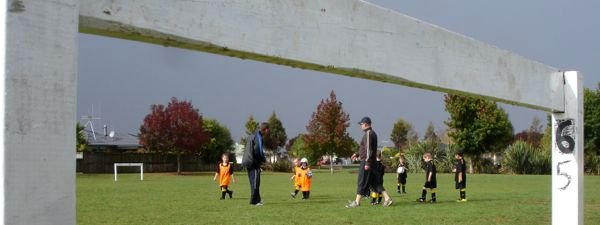
The opposition player intercepts the ball and launches through the gap towards our goal. Screens of “get back there” are heard from the side line as one of our team sprints his little heart out to try and be between the ball and the goal.

His opponent strikes the ball hard, it ricochets off the post, bounces off our player, and scores an own goal.

One of our team steps up and calls his team made an “idiot” for scoring an own goal and I intercede and explain that he had run hard and it was unlucky.

Later I thought about the parallels to other teams.

I thought about how sometimes we can do all the right things, but just be unlucky.

I thought about how often we can get down on someone for a mistake, when it was unintentional and they are just trying their hardest to win.

I thought about how often the people who complain the most, are the ones who left their team member to do it alone. Had they helped the outcome could have been all together different.

I thought about how sixth grade soccer is radically different to competition in the real world. And yet soccer, along with other sports, is where most of us learnt to be in teams.

928S32ZPU6WR


« Older posts Newer posts »