Lead a vivid life that does good

Category: Life Lessons (Page 7 of 8)

2 tips for being more generous and compassionate.

On a wet humid evening we sat outside on the bustling street corner, in the heart of the action, waiting to enjoy our meal. The restaurant we chose, our clothes and the colour of our skin screamed to the locals that we were wealthy foreigners to Phnom Penh, and almost immediately we were confronted with invitations to purchase or give. Girls the age of my daughters selling bags, young men selling books and a Mother with a young child simply begging. At first we engaged with them, then quickly learnt it was easier to ignore them and their need.

Later as we meandered along the streets we saw a young child (12 – 18 months) standing on the footpath. I glanced down to see her mother bent over a rubbish bag scavenging for food. As I walked past I realised it was the women who had begged from us at dinner. The woman and child I had ignored. I returned and gave her some money, she thanked me, and went back to scavenging in the rubbish.

I learnt some lessons that evening, learnings that have implications beyond the poverty encountered in Cambodia.

We must be prepared to give:
When I hit Cambodia I hadn’t formed this thinking, which meant each situation I encountered required me to make yes/no decisions. Soon the answer just becomes NO.

You can’t fix everything you see, so being prepared means having the forethought to know what you believe in giving to, and how much. And to whom.

This applies equally back home. Knowing what we will give to, helps when people knock on the door or telemarketers call. Importantly knowing what you believe in giving to, means you will give. If you’re not prepared the answer quickly becomes NO.

We must be ready to give:
If being prepared is a state of mind, then being ready is practical. For us it meant having small amounts of money available for donations. Whether running in the morning or on a Tuk Tuk, we had money to give without hesitation to make a small difference.

At home, I barely ever carry money, and therefore it is significantly harder for me to give without hesitation to make a small immediate difference.

I know a lot of people like me have a heart to give, to be compassionate and yet miss opportunities. So may you prepare your hearts to know when and how you will give. And then may you be ready to give without hesitation.

May you encounter the joy of making a difference.


Lesson 1 from Cambodia visit 2012: Being prepared to give.

Creating a personal strategy to help you achieve your dream and goals.

GoalsOne of the funny things about returning from annual leave is that I often have this utopic desire to live a more purposeful life. I guess the relaxation, uninterrupted time with family and the space to think, lead me to want to create more of those spaces in my normal life.

Recently after returning from leave I realised that in our business we have strategies to move us towards our vision and these strategies help us choose the right actions.

In my personal life however, I had never put strategies in place and this needed to change.

Understanding the difference between vision and strategy and actions can be difficult so here is a personal example.

  • Vision is your dream or long-term goals. One of my visions is to “be a person of influence” (hopefully a positive one).
  • Strategy is a high level way of getting to your vision. My current strategies for increasing influence are “connecting with 4 people each week” and “writing weekly”.
  • Actions are the things you do each week to get that align to your strategy. My actions are appointments I have with people and time I actually spend writing.

The truth is I haven’t written each week and I haven’t met with 4 people each week. But, I have written more and connected with more people each week. I also track how I am going in my personal weekly check list which I review in my weekly review (this is the key to not forgetting it).

And even though I don’t achieve it each week, my influence is growing, and I am meeting and connecting with more people, which is energizing me and making me a better person.

Most importantly each week is deliberately better than it would be without them.

So what will your strategies be?

If you would like to see my current strategies, I have posted them at outward.me.

Learning to do

My daughters as a part of their reading development are both learning to infer the meaning of what the writer is saying. I guess inferring means reading between the lines to gain a better understanding.

Over the years I hope to teach them the importance of finding the implication of what the writer is saying. Not so they can search for the implication for everyone else, but so they learn to seek an implication of what they read to themselves.

Often as adults, we read to gain knowledge and readily see the implications to everyone but ourselves, but fail to make personal change.

So maybe now is the time to teach my daughters to read and infer and imply. And maybe now is the time to teach them to take action.

Then rather than having my kids learn to know.

They would learn to do.

4 tips for losing weight, quitting smoking and changing habits.

Our conversation was casual and jovial as we talked of my friend’s attempts to quit. Like all of us he had tried and failed on more than one occasion, except he was trying to give up smoking, an addiction I have never had to break.

As we chatted through the failed attempts of the past I said to him that he had never ‘resolved’ to give up. He had never really decided. He had not truly decided that he would never smoke again, and until he did all the quit smoking aids in the world would not help him.

He asked, as I would, “OK then, how do you get resolve?”

Around the same time another friend was losing weight (36kg in 6 months to be exact). He had lost weight before, he had tried and failed on more than one occasion, only this time something was different.

This time he has resolve.

I can hear it in his words. I can see it in his eyes; there is a steely-eyed determination to make this stick.

Resolve is different to self-discipline. Resolve is a determination and self-discipline is the habits that keep you on track.

Having been asked, “How do you get resolve?” my answer at the time was simple. I don’t know. I know when I have it, but I don’t know how to make people get it.

From my experience however the progression towards resolve goes a little something like this:

1) Know the Change.
If you don’t know you need to change you wont. Knowing an addiction or habit is bad is quite different from knowing it is incredibly bad for YOU.

2) Know the Future.
Maybe this is a specific goal like a target weight; maybe it’s knowing you will be a better leader by changing a habit. In any case you need to appreciate how the future you will be. Some could call this a goal, or a dream.

3) Know the Support.
Before you get resolve, somehow you need to know you have the people, tools or support to get you through. Giving up smoking if everyone around you smokes is almost impossible. Trying to lose weight without tracking what you eat, wont happen.

However, if you know you have supportive people, smoking patches, food diaries, whatever before you start, you are far more likely to succeed.

4) Now Decide.
Now the key to resolve is deciding. At some point you need to be by yourself, know change is needed, know what you want, know you have support and then decide.

Really decide.

No one can do this for you, and I wish I could tell you how to decide, but I cant.

I do know from personal experiences to lose weight, exercise regularly for the rest of my life, make decisions quicker, reduce debt or lead better, that it takes full resolve to get through.

A half-hearted resolution is not resolve. To have resolve is to commit fully. In hindsight and somewhat strangely I can tell you exactly where I was when I made most of my big decisions.

Even the language of a resolved person is more determined.  I will always do… I will never … For the rest of my life … For the next 30 days I will…

The rest is easy easier.
Once you have resolve you will still have bad days, still be lured to old patterns and often struggle with the task at hand.

Habits need to be changed after all and changing habits takes time. But once you have resolve something in your core has changed. The default is different. Your self-talk is different and you slowly but surely make it.

My friend has stopped smoking. Both friends have resolve. I didn’t give it to them. They decided for themselves and it has been life changing.

So…

I hope you shoot for your goals.

I hope you get the resolve you need to change.

I hope your life is changed.

And if I can help in any way I would love to chat.

20120602-070846.jpg

I wonder what important parcels or documents are on board this DHL plane? I am sure that somewhere a person waits for the arrival of a parcel, that is possibly the most important thing in their life right now.

At the conference, most of the speakers felt like they had something important to say. They have important jobs, and it was critical they get their learning across.

Important comes from the word import. To import means to ‘bring in’. We can tell what is important in our lives by the things we ‘bring in’. What we buy, how we spend our downtime, who we talk to, all indicate the things we think are important.

Lets be honest for a moment. Important focuses on ME!

Exportant is not a word but maybe it should be. It would mean to ‘give out’. Maybe our lives should be measured less by what we bring in and more measured by what we give out.

Then how we spend our money, our downtime and how we talk to people, would be focused on what we give out, rather than what we bring in.

Then we would be exportant.

And most probably what we actually do, would become genuinely important.

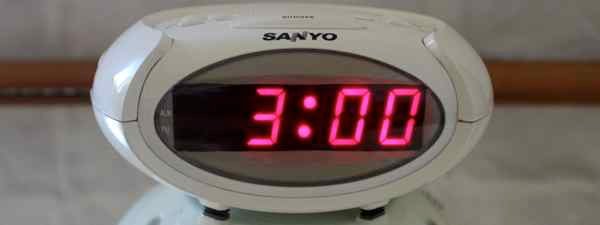
Throw out the Alarm Clock and grab an Opportunity Clock

Clock
In bed, out to the world, in a state of near comatose when suddenly that repulsive noise breaks the silence. The canned music or loud buzzing interrupts our dream, sleep is over, and we are called back to the land of the awake.

The work of the alarm clock is done for another day.

So why is it called an ‘alarm’ clock?

Is a new day really meant to strike such terror into our life that it is cause for ‘alarm’? Are our dreams so good that we need ‘alarm’ to bring us back to reality? Lets change the name of our alarm clock.

Lets call it an OPPORTUNITY clock.

When it awakes us from our slumber, it wakes us to new opportunities.

Opportunities to live. To taste. Listen. Touch. Smell. See.

Opportunities to create new things. To learn new things.  To experience new things.

Opportunities to experience laughter and sadness, fun and pain.

Opportunities to know and be known. To love and be loved. To seek God and experience freedom.

Everyday I have a choice. Start with an ‘alarm’ clock. Or awake to an ‘opportunity’ clock.


nb: I didn't create the term Opportunity Clock, just heard it and build on it.

Strengths = Being Good and Passionate

strengths finder.jpg

For some unknown reason I am both cursed and blessed with a natural ability to do accounting. So much so, that some people consider it a strength.

I am blessed because when you run a business it is good to have a firm grasp on the numbers.

Yet I am cursed because I actually really hate doing accounting. Nothing sucks the passion from my veins as quickly as doing accounts.

So is accounting a strength? Just because you are good at something, does that make it something you should do?

No

I believe strengths, real strengths are the things that you are really good at, and really passionate about.

According to Strengths Finder 2.0 my strengths are Strategic, Ideation, Futuristic, Competition and Self Assurance. And I am actually quite good at these things, just like accounting.

When I am doing them I feel like I have hit my sweat spot. I am passionate about whatever I am applying towards. I am energised.

Your strengths are things you are passionate about and really good at.

Go find them this week.

Work on them.

Nurture them.

It will energise you.

327|365 Learning

Day327.jpg
This whole school and education thing seems to work. Jayden basically start school in June and has progressed from reading one work, his name, to reading little books. He is really proud of his achievements and I’m really proud of him.

In the initial stages of learning something new we make huge progress, really quickly. As time progresses’ learning gets harder, more complex and takes more discipline. Then it requires huge amounts of brainpower, and before long most adults quit learning altogether.

Maybe it’s time to return to the basics of learning. Find something new, something completely different and explore it. To make huge progress really quickly. To enjoy learning again.

262 | 365 Super Coach

Rototuna GreenLast year I coached my daughter’s 8-a-side hockey team and I thought I did a half decent job given I had absolutely no knowledge of hockey prior to becoming coach.
 
This year her team has two very talented and very experienced coaches, Neil and John, who have played, coached and lead hockey for years.
 
Let me say, there is an extreme disparity between my coaching and theirs in developing the skills of the entire team. Oh, and they win more often than not.
 
It turns out that leadership skills and experience make a good coach. Not one but both. Yet often in business or other organisations we expect people to “coach” when they have little experience or leadership.
 
Little wonder the team members don’t develop.

246 |365 Strength based schooling

Children Cross SignI can’t remember my first day at school, but my dad can. He was told off for eating his lunch at morning-tea time. Told off as in 1940’s told off.
 
Schools have changed significantly over the years. They are more creative, more interactive, with better teaching and more opportunities. They have also made huge in-roads into catering for various learning styles.
 
I think the next big leap for schooling is focusing on strengths. Our national program still seems to focus on creating students who are all OK at everything. They still struggle to deal with a kid who excels in Math, but has work to do in reading.
 
The focus goes on reading, which reduces the enjoyment of the child and therefore effects math.
 
Took this photo as I was wondering how Jayden’s first day of school would go. All 3 of our children have hit school at 3 very different strengths.
 
I wonder what his strengths will be?

« Older posts Newer posts »