Lead a vivid life that does good

Category: Business Startups NZ (Page 2 of 4)

Why you should believe in failures like me.

School Report Tauranga Boy CollegeI failed at school.

The best mark I received was an internally assessed A1 in School Cert science. It belonged to another student called Andrew Nichol and was whisked away as quickly as it arrived.

I left school at 17 barely able to read, average at the more complex forms of maths, but strangely very good at accounting. Despite being a “failure”, I have discovered I am actually not as dumb as the school system lead me to believe. In my adult years I taught myself to read (by reading more and more books I actually enjoy).

I have also been given incredible opportunities to lead.

To learn.

To succeed.

Why?

Because throughout my life, many incredibly courageous people have believed in me despite my failures. They were courageous because I could have crashed, failed again and tarnished their good name.

I would not be who I am today without their generosity.

All of us have people who’ve believed in us against the odds. Therefore the implication is simple.

Who are we investing our time into, who might just succeed if we just see past their failure?

Who are you believing in against the odds?

Maybe its time you found someone.


Finally a shout out to just a few of the names I have randomly thought of as I wrote this post. Mum & Dad, Craig Jamieson, Dale Henderson, Bob Addison, Matt Ruys , Neville Stevenson, Ian Hogan, Colin Shotter, Dave Medhurst, Geoff LeCren, Glyn Gray, Jeff Smith, Bruce Thomson, Mark Thompson, Iain Hill, Jim Quinn,, Rowland Forman, Ken Frost, Campbell Forlong, Jim Grafas and of course Karina Nicol. Thank you for believing in me at various stages in my life. I am more grateful than words can express.

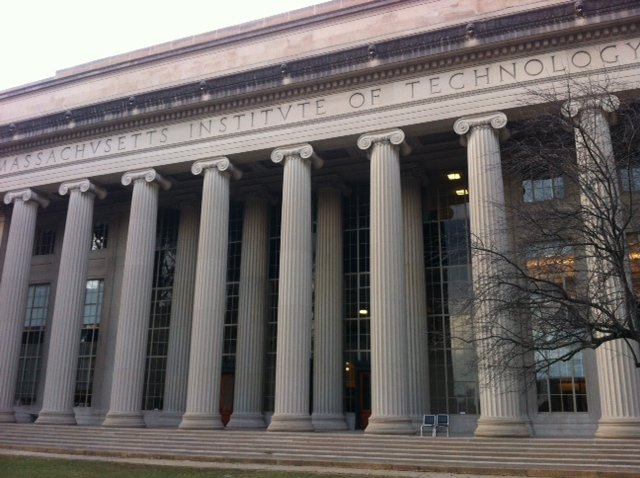
4 key lessons after attending the Entrepreneur Development Program (EDP) at MIT in Boston.

Massachusetts Institute of Technology

Moments earlier we had been given five minutes to prepare our business idea and now I found myself pitching, to one of the 126 entrepreneurs gathered from around the world. They’d pitch their idea, I’d pitch mine and we would agree how we would split 7 points. You take 2, I’ll take 5 (not that easy with A type personalities).

After 7 pitches to complete randoms, we had a score out of 49. Bill Aulet, Managing Director in the Martin Trust Center for MIT Entrepreneurship, humorously states that higher scores (I was 6th highest) meant you either had a really good idea (mine was created in 5 mins on my flight to the US), or you were really pushy (StrengthsFinder calls it “competitive”).

The top 26 of us pitch to the remaining 100 and then they walked up and choose a team, leaving only 16 ideas. Through this ad hoc process team reCollect was formed.

They say that attending MIT is like drinking from a fire hydrant, and over the next week we were saturated with ideas, discussion, teams sessions and coaching. So much so that it is only now I am narrowing down key lessons.

#1 Team is everything. The team that chose the reCollect idea was smart and diverse. Neil and Mark from Scotland, Rafael from Spain, Saeed from UAB, with Tanmay, Jax and myself from NZ. We all had radically different backgrounds and skills, which meant we ended up working incredibly effectively as a team.

I was reminded at MIT that having a cross functional team with a complimentary skill set is critically important when starting anything new. Startups with co-founders are more likely to succeed, however founding with friends you have never worked with before is more likely to fail.

Build a great team with a common vision, but different skills and networks.

#2 Narrow your focus. Many startups spend huge portions of their precious resources on trying to be all things to everyone. Successful startups spend a lot of time talking with a narrow market of customers before they even build a product to make sure it is something they will actually use, and more importantly pay for. Test an idea and pivot constantly.

Narrow your target market right down and talk constantly to you potential customers.

#3 GSD: Get S(tuff) Done: Just make stuff happen. You can talk about it, have meetings, create really great plans and strategies, but if you don’t GSD and get a product delivered then it is worthless. Herb Kelleher of Southwest said “We have a strategy plan. It’s call doing things!”

everyone needs to GSD, and add real value to the customer. Everything else is worthless.

#4 Cash: Capitalism in America is NOT dead. To be honest if a Kiwi has a great idea and someone in the States has the same idea. They will be funded about 10x more than you. Thats the reality. It doesn’t mean you can’t win, just that you need more resolve around the first 3 points. The downside risk to not having cash, is we fail to rapidly build Innovation Based Enterprises at a speed quick enough to compete.

Charge your customers as soon as possible, export and seek funding. Run out of cash and all your hard work means nothing.


Attending MIT was a fantastic learning experience, which I liken to reading 12 books in a week. Thanks to MSI / MBIE,  now Callaghan Innovation for the incredible opportunity.

Watch this space for a new business to spin out of Agoge this year.

2 lessons about leadership I gleaned while being driven through Phnom Penh.

Those of you who have travelled through parts of  Asian know how mad, crazy, radical their driving can be.

[vimeo http://www.vimeo.com/54691916 w=500&h=282]
If you haven’t, watch this short video of a normal intersection at 6:30 at night.

At first we described it as ‘Organised Chaos’ and soon realised that it was best described as “Disorganised Order”. Everyone headed were they needed to go, in an orderly yet apparently disorganised way.

The drivers themselves were probably the most fascinating part of the driving experience. They’re a paradox of determination and grace. They wanted to get there first and fast, but were gracious as others pushed and squeezed their Tuk Tuk’s into gaps that moments before didn’t exist.

Disorganised Order,

and

Determination with Grace.

Disorganised Order, you don’t see that much in business or law in New Zealand. I wonder if it isn’t the essence of being truly entrepreneurial.

and

I have met plenty of determined people, and I have the privilege of knowing a lot of gracious people. Sadly, most often the determined people are not characterised by grace.

Determined with Grace, describes the leader I would like to be.

Creating a personal strategy to help you achieve your dream and goals.

GoalsOne of the funny things about returning from annual leave is that I often have this utopic desire to live a more purposeful life. I guess the relaxation, uninterrupted time with family and the space to think, lead me to want to create more of those spaces in my normal life.

Recently after returning from leave I realised that in our business we have strategies to move us towards our vision and these strategies help us choose the right actions.

In my personal life however, I had never put strategies in place and this needed to change.

Understanding the difference between vision and strategy and actions can be difficult so here is a personal example.

  • Vision is your dream or long-term goals. One of my visions is to “be a person of influence” (hopefully a positive one).
  • Strategy is a high level way of getting to your vision. My current strategies for increasing influence are “connecting with 4 people each week” and “writing weekly”.
  • Actions are the things you do each week to get that align to your strategy. My actions are appointments I have with people and time I actually spend writing.

The truth is I haven’t written each week and I haven’t met with 4 people each week. But, I have written more and connected with more people each week. I also track how I am going in my personal weekly check list which I review in my weekly review (this is the key to not forgetting it).

And even though I don’t achieve it each week, my influence is growing, and I am meeting and connecting with more people, which is energizing me and making me a better person.

Most importantly each week is deliberately better than it would be without them.

So what will your strategies be?

If you would like to see my current strategies, I have posted them at outward.me.

Unspoken Expectations

20120203-061901.jpg

We all have expectations of the people around us. We have an expectation that our spouse will do certain things. We have expectations on our kids, our bosses, our staff and even expectations on people we barely know.

And when people don’t live up to our expectations we get annoyed, frustrated and even angry. This leads to a break down in the relationship.

A few years ago I was introduced to the term “Unspoken Expectations” and I realised that so often the expectations we have for people, we haven’t discussed with them.

Say I decided I would really like a quiet relaxing Saturday at home. Then my wife and kids bounce me around the city doing “unplanned” things (on their list of things). I can become annoyed. I don’t want to bounce around the city. I need to relax.

But if I never sat down and discussed my need to relax with my family how would they know? If I never listened to what they needed to do, how will I know if my desire to relax is achievable? How will we negotiate a middle ground BEFORE we set about our day.

Yet, over and over again, we fail in relationships to speak our expectations beforehand (arguing about them afterwards doesn’t count). I have learned firsthand over the years “unspoken expectations” are a significant cause of relationship breakdowns in families, workplaces, charities and friendships.

If you don’t communicate and agree the expectations, it is not the other persons problem…

It’s yours!

Marketing Spin from Hamilton City Council and Telecom.

Flying Solo 07
Telecom recently sent me a letter. It tells me how good they are for doubling my broadband usage from 20GB to 40GB. They are also putting the price up by $5. Thanks Telecom, you are really nice guys, except for the fact we don’t use 20GB and there is a new plan for 20GB that is $10 less per month.

I feel cheated.

Hamilton City Council sent me a letter telling me the valuation they use for rates are changing. They show me my rates now, and then show me my new rates, with water and rubbish separated. At first glance it looks like a saving, until I read the fine print of the existing rates. They include water and rubbish, so when I add the three up I am worse off.

I feel deceived.

My issue is not so much with the changes, but more importantly it’s with the way it’s communicated.  Why the ‘spin’? Why try to deceive us? Why not be honest?

Telecom really aren’t increasing my broadband because I need it, they are doing it to generate extra revenue. HCC are just playing politics.

Neither wants a relationship with me and therefore I don’t deserve authenticity. If they upset a few people along the way. They don’t care.

A small business like mine can’t behave this way of course. We would lose our customers, and our customers pay our wages.

But, it is a reminder nonetheless to make sure all of our marketing is authentic, and honest, and ultimately treats people, the way we want to be treated.

Is it even possible to WIN without competition?

342-Josiah-Natzke
Yesterday we headed out to Patetonga to watch our friend’s son race in Motocross (#342 in picture). He is racing smaller bikes in a larger class to give him more competition, as he often nails the competition in his normal class.

This made me think about the importance of competition.

One of my 5 strengths from Strengths Finder 2.0 is Competitive. I love winning and hate losing. When there is something to win, I try my hardest to win it (or often don’t play if I know I cant win, I hate losing so bad). Competition for me, causes me to work harder, think more creatively, be more persistent.

So.

We talk a lot about winning. About being winners. About being successful. About improving ourselves.

Yet.

We have become anti-competition. Kids play sports and do stuff to participate. Most businesses don’t care about their competition. Charities think competition is bad.

But.

Is it even possible to WIN without competition?

Well no.

Not for me at least. I am reminded from yesterday that healthy competition, the kind of competition that stretches you to become better, is incredibly important.

And right now I need to add some of that back into my life.

What do you do?

Oh, what do I do?

Well “I run a business that provides training and recruitment services to the transport and logistics industry”. This has been my answer in the past and it is fair to say that usually stops the conversation dead. (As it turns out transport is boring and most people have no idea what logistics is.)

At more social gatherings I have answered “oh, I buy and sell people for a living”, this kills the conversation just as quick but I do have the satisfaction of the priceless “wacko” expressions it generates.

Recently, as a part of my journey to be more outward, I decided to change the way I answer that question. I now say words to the effect of:

“I’m a Social Entrepreneur, I am involved in various businesses and charities for the purpose of enabling social change”. 

The reason I have changed what I say, is because I am passionate about more than just Agoge which is my day job. I am passionate about Agora, Good, CBC, WOL, and SIMP.  I am also passionate about family and friends and strangers because through all of them and in them I make a small social changes for the better in this world.

The implication: Generally when someone asks us “what we do?”, we answer with our job, when in reality we do so much more.

So, what do you do?

258 |365 Success fades

Day258.jpgWent in search for the Addington Coffee Co-op, took a wrong turn and ended up driving past the old abandoned Wood Bros flour mill. A quick google search reveals “The mill opened in 1891 and was powered by steam, lit by electricity and serviced by the railway line next door. The storage buildings pictured here were built in 1924. By 1936 it had the largest output of flour in the South Island. In 1970 Wood Bros Limited sold the mill complex”.
 
Wood bros no longer exists as a company.
 
It’s a reminder that even the most successful companies of their era, like the people who run them, will eventually fade away.

244 | 365 Social Enterprise

Wurld Water PosterA Social Enterprise is a business that makes profit to effect social change by giving its profits to a charity or cause. It has been touted as the way increase funding for charities beyond donors.
 
At first glance it seems easy. Set-up a business, make money, give the profits away.
 
The reality is a lot harder. As a business you still need capital, profit and cash. Did I mention cash!
 
Added to that is the complexity of trying to tell an honest story about what you do (do, as in actually do, not plan to do). There is also inherent social and brand responsibilities to actually deliver profit to the cause, as many of your customers purchase from you because of your story. Finally social enterprise is generally driven by the conviction of founder, which makes failure so much hard.
 
For the record I consider myself a social entrepreneur. I love business and long to make social change through it. Social enterprises are not impossible, just significantly harder.
 
A couple of cool social enterprises are Café Agora (www.agora.net.nz, where this picture was taken) who sell Wurld Water (www.wurld.org.nz) check them out.
 

« Older posts Newer posts »