Lead a vivid life that does good

Category: Life Lessons (Page 5 of 8)

3 steps required to become fit and healthy.

JohnsonvilleI was running around the hills of Johnsonville recently, which if you come from a relatively flat Hamilton, can be very taxing. As I ran and navigated the streets that I used to live on, I thought about how I’ve run more in Wellington, since I’ve left Wellington, than when I actually lived there.

When I was in Wellington, I was eating crappy food, not exercising, and really putting on weight.

At the time I thought I was busy, but I was not as busy as what I am now.

At the time I was in my 20’s and thought I was bullet proof, despite the fact that I’d been given high cholesterol warnings from the doctor, and people commented on my putting on weight.

I would like to say that I took those as a warning and started to improve my health, but it’s sad to say that my health got significantly unhealthier and it would be over ten years before I made the change.

As I ran the streets that morning I realised that it would have been good to get healthier earlier. I thought about how much exercise and eating right helps me. It gives me better mental energy, less stress, better health, better fitness, and a better life in general.

I regretted the fact that I hadn’t got healthier earlier, that I hadn’t run the streets of Wellington when I was young and actually lived here.

I think there might be some strange link between exercise and energy. Shock horror!

Every time I stop exercising or eating well for a season I quickly get stressed, put on weight and feel tired.

At those times I know there are three steps I must take:

  1. Resolve | If I don’t decide to do something, nothing will happen. I need to give myself the proverbial kick up the butt and get moving. Without resolve I rarely make it.
  2. Equip | I make sure I have the tools to build a routine and pattern. Maybe it’s apps like Lift.do, ShapeUp or a gym membership, or a friend to spur me on.
  3. Start | I generally start small and try to do something every day. Just create the habit and then let the habit move me forward.

If you are in that space… you should do something.

Today!

I don’t get time to …

I don’t get time to … think

I don’t get time to … exerciseclock

I don’t get time to … read

I don’t get time to … do good

I don’t get time to … play with the kids

I don’t get time to … relax

I don’t get time to … [fill in the blank]

You are right of course.

You only get time to do the things you choose to do. You can’t make time, but we can lose it doing the wrong things.

Like me you probably need to stop doing some things, to make time for the things that are really important.

Stuck! – Do you really know the next step?

Next StepIt was a bleak, grey morning, and my 14-year-old daughter sat on the couch in her pyjamas, really struggling to get started on a massive homework project that she had. It was as though the burden of the project hung over her as dark as the clouds outside. The project seemed daunting and unachievable.

After some cajoling, I managed to get her to get dressed and we headed off to a cafe down the road. And that’s when I started to teach her (as best a dad can) to work out what the next step was. I asked her to break down the next step … then break it down further … and then break it down even more, until we got to the real simple achievable next step.

The problem a lot of us have when we’re faced with a big task, or with an assignment or with a massive project, is that we keep thinking about the outcome, and we fail to break it down to the next step.

What is the very next thing that I need to do?

In the case of my daughter’s protest poetry, she had to first narrow down who it was she was going to protest about. She had to find two or three people, or causes, that she could protest about. Once she had those, she had to decide on one! That was the next step.

And then once she had that, she had to break that down and learn something about the cause that she was protesting for. Then brainstorm the verses of the poem. Then she was away.

Easy … or at least easier.

When you’re faced with a challenge, or a project or an assignment, how can you break it down further?

How can you look for that next step?

What might that next step be? One that you could complete in a few minutes that would move you forward.

Once you are moving it’s surprising how momentum follows.

How to determine if you are an Introvert or Extrovert

IntrovertAre you an introvert or extrovert? It’s a question many of us been asked.

If you are an introvert, we’re told, you have a tendency toward your own thoughts and space, and if you are an extrovert you supposedly like to obtain gratification from outside yourself through others.

So which are you, Introvert or Extrovert?

You are probably both.

Over the years science has discovered that Introvert/Extrovert is not one or the other, like people imply. Rather it is a scale, a bell curve in fact. Most people sit somewhere close to the middle. You may be slightly more introverted, which explains why you are shy in some settings and the life of the party in others. Or you may love being around people, and yet often need your own space.

And of course, like every bell curve there are a few people, very few, at the extreme and these people are the people we usually think of when we hear the term.

For years I felt because I was shy and enjoy my own thoughts that I was an introvert. At the same time, I love being around people and actually enjoy standing and speaking in front of large crowds of people which feels more extrovert. I often defined myself as an Introvert by nature, possibly because the first Myers-Briggs test I did, gave me an I (Introvert) instead of an E (Extrovert).

Self-labelling can be dangerous, and I or E is not an exception.

Few of us are really an I or an E as the tests describe at face value. You may be 40% Extrovert and 60% Introvert, which means you can be both. You just need to push a little harder to be an Extrovert and Introvert comes a little more naturally BUT you can be both.

And reminding yourself that you can be extroverted just as you enter a room of strangers can be incredibly liberating and rewarding.

I or E isn’t important.

What matters is growing in both.

What’s your body telling you? Is it time you listened?

headacheIt was a pain in the neck, quite literally, the project that I was working on. The tension in my neck and shoulders were leading towards a lovely mid-afternoon headache. I thought about opening my bag to retrieve some Nurofen or Panadol, but instead I asked myself a question.

What’s your body telling you?

My body was telling me that it was tired, my body was telling me that it needed some fresh air, my body was telling me that I had had enough of staring at the screen in the hope of finishing this project.

For once, I listened to my body. I got up, went out into the beautiful crisp winter’s day and went for a walk. Almost immediately I felt the pressure on my neck start to relax. Quickly, I felt refreshed and rejuvenated, all because I had listened to my body.

Often in our constant quest to be more productive and effective we ignore what our body is telling us. When we have headaches or pain, our initial response to keep going and to use painkillers just to get us through the day. Maybe we’re over tired, so we drink Red Bull; or feeling down, so we reach for our latest comfort food.

While that response can keep us going, it’s often not what our body needs.

And sometimes it’s just plain unhealthy.

What is your body telling you?

Is it telling us to reach for another Panadol … or for that energy drink … or for that food?

Or are our bodies suggesting that, now is a good time to get out, have a break, relax and unwind a little bit?

Maybe after we’ve done that for ten minutes, we’’ll come back feeling alive and rejuvenated and our work will actually happen a lot quicker.

Maybe, it’s time we listen to our bodies.

Often ‘Being the Best’ first requires failure

Audit ReportRecently, one of our business divisions was audited by an external auditor, and the comment was made that a particular process is the best that she’s seen in the industry. The irony is that these processes came about because we failed, and by that I mean failed significantly, three or four years ago.

This got me thinking about what it takes to be the best, and whether being the best, at some point, requires massive failure.

Is it possible that failure causes us to reflect, to learn, to change? Is it possible that failure causes us to radically change things so that you can actually strive to become the best?

Being the best is not just a decision you make when things are going well, being the best is something that is refined through the dark patches, risks taken and failed, and through lessons learned the hard way.

What will you do to be the best?

Is that the challenge at work, or failure, or relationship issue, that you’re going through right now could actually hold the key to being the best?

Maybe it’s time you took some massive steps to change.

Then quite possibly, in the future, someone will notice that you are the best!

What’s the story of your life?

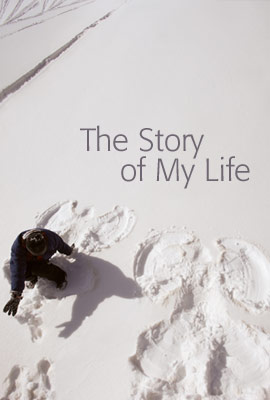
TheStoryofMyLifeIt’s funny the things you overhear a snippet of as you walk past someone. Recently I walked past a young boy, 6 or 7 at a guess, and his mum walking along the footpath. As I pass the only part of their conversation that I heard is the boy boldly proclaiming to his mum “That’s the story of my life.” She laughed as it was obviously a phrase he doesn’t use often.

As I walk I mused about how it was a funny thing for a young kid to say. Then I was reminded that far too many adults use the phrase to define who they are.

It’s not often “That’s the story of my life” is used in a positive and successful way. That’s the story of my life, is normally a negative, broad statement implying that this always happens to me. That it’s a lifelong pattern.

Maybe it’s time to change that story. To tell a new story. A story not defined by your past, rather a story a small incremental change. The kind of change that you don’t notice day-to-day, but you do notice when you look back over months or years.

You have the power to change your story today, or you can decided to carry on as we were, then it truly will be “the story of your life”.

What’s the story of your life?

Are past experiences and failures shaping your story?

Why not commit to making a small change today. A small tiny wee step towards changing your story, so that you can replace the words “that’s the story of my life” with these words…

“Let me tell you my story…”

Are you dressing for success?

Dress for SuccessYou wouldn’t wear Pajamas to an interview or shorts to a formal dinner. That’s because we know that how we dress impacts how people see us, and we like them to see us at our best.

The truth is, what we wear has more impact on us, than it does on those around us.

What we wear can significantly change our mood and attitude and activity.

What we wear is a powerful trigger for our minds, which help us make things happen.

And, what you wear next will determine how successful you will be.

Know you should go exercise but can’t be bothered; get dress for exercise, put your shoes on, and off you will go.

Need to be creative at work; flag the business clothes and wear smart casual.

Had a hard day at work; get changed into comfortable relaxing clothes as soon as you get home.

I’ve found using clothes to shift my mood or attitude or activity really does make a huge difference.

What you wear will as well…

Nip ‘But’ in the butt and replace it with…

BUT - HT amt-group.comI was chatting with a guy recently who was asking to be involved in some work I do. As we discussed what we were doing he didn’t seem to agree with my approach as he used the word ‘BUT’ in every other sentence.

I agree, but…

Yes, but…

That’s good, but…

‘But’ gets used just before you contradict or contrast the previous statement. ‘But’ completely disregards their point of view and even experience.

We need to nip ‘BUT’ in the butt, and replace it with ‘AND’

‘And’ builds, it takes the experiences and knowledge of the other person and adds to it.

‘And’, acknowledges what you are saying is cool and let me contribute more.

‘And’, says I respect you.

When you start noticing how often you say ‘but’ on topics you have strong opinions on, it will blow your mind. Changing any habit is hard and resetting language habits is no exception. When you catch ‘but’ being used, correct yourself, use ‘and’ then see where it leads the conversation.

‘And’ means you will contribute more AND you might even learn something along the way.

When you lend, should you expect nothing in return?

Books - Learning to doI have small simple systems for everything including tracking who I have loaned books to.

A couple of days ago I looked at who was on the ‘naughty list’ of people who haven’t returned my books. Some of these people have great books and they have had them for years. As I looked at the list I mused how often I never get books back, but I left the list unchanged.

This morning I read “But love your enemies, do what is good, and lend, expecting nothing in return”. I realised I should expect “nothing in return” and holding a long-term list of books actually meant each time I reviewed the list; I subconsciously put a negative mark against their name.

I culled the list.

So if you have books of mine … consider them a gift.

Expecting nothing in return is not just about books, or that $10 you lent.

Expecting nothing in return is about being generous and gracious and doing good.

And for us, expecting nothing in return means you free yourself from the mental and emotional energy needed to hold on to something so small.

What are you expecting in return from someone?

Isn’t it time you just let it go.

« Older posts Newer posts »