Lead a vivid life that does good

Author: Andrew (Page 13 of 43)

2 ways to learn from experience.

Waihi_Beach_SafetyThere is perhaps nothing more quintessentially New Zealand, than a day swimming and playing in the surf. As a child’s age and experience increases, so does their confidence. The waves they catch now are a far cry, from the waves they ran from as toddlers.

There is also perhaps no better example of experiential learning, than learning to be safe in the surf. You could read up on beach safety, but until you have been tumbled by a huge wave and felt the current ripping along the beach, the theory means little. Unfortunately many people in New Zealand get into trouble on our beaches because the rely solely on their own, very limited, experience and don’t learn from the knowledge of others.

Our best learning comes in two ways, through a blend of our own experience and from the experiences, struggles, skills and wisdom of others.

If you really want to learn quickly, constantly seek both.

Lately I have had the opportunity to lean in and glean insight from a few very talented people, many of them younger than me. Their stories, their background and their actions form unique lessons that have portability across many areas of my life.

I have been reminded that it is important to learn from my own experiences, but it is equally important to learn from the experience of others.

I think we forget to do the later all too often.

Being the best.

Trae - "My Mum is the best"I was honoured to hear a friend give a talk about being the best in everything she does. She spoke of what it means to be the best in her music, as a mum, for her boys and at agoge.

Her words reminded me how striving to be the best is difficult and I was challenged about how often I settle for less. What follows are a blend of her words and mine as I contemplated what it means to be the best.
Being the best means failure, as you struggle to live up to your own expectations

Being the best means embarrassment, as you publicly stumble along the way

Being the best means getting it wrong, as you learning new ways

Being the best takes risk

Being the best takes courage

Being the best takes sacrifice

Being the best takes faith

Being the best takes diligence

And the best of the best do all that … with humility and love.

Be the best!

4 key lessons after attending the Entrepreneur Development Program (EDP) at MIT in Boston.

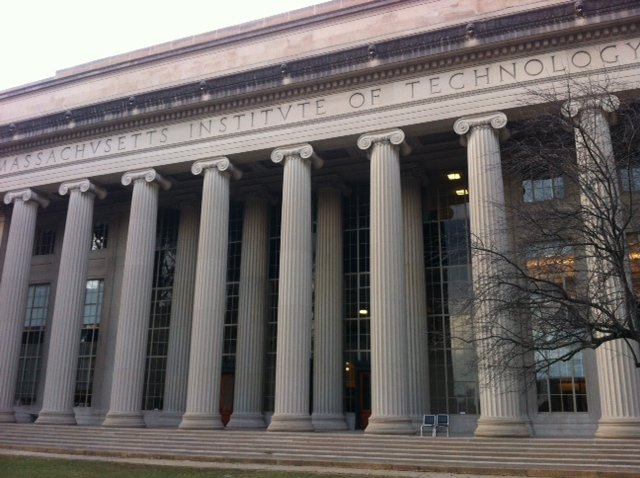
Massachusetts Institute of Technology

Moments earlier we had been given five minutes to prepare our business idea and now I found myself pitching, to one of the 126 entrepreneurs gathered from around the world. They’d pitch their idea, I’d pitch mine and we would agree how we would split 7 points. You take 2, I’ll take 5 (not that easy with A type personalities).

After 7 pitches to complete randoms, we had a score out of 49. Bill Aulet, Managing Director in the Martin Trust Center for MIT Entrepreneurship, humorously states that higher scores (I was 6th highest) meant you either had a really good idea (mine was created in 5 mins on my flight to the US), or you were really pushy (StrengthsFinder calls it “competitive”).

The top 26 of us pitch to the remaining 100 and then they walked up and choose a team, leaving only 16 ideas. Through this ad hoc process team reCollect was formed.

They say that attending MIT is like drinking from a fire hydrant, and over the next week we were saturated with ideas, discussion, teams sessions and coaching. So much so that it is only now I am narrowing down key lessons.

#1 Team is everything. The team that chose the reCollect idea was smart and diverse. Neil and Mark from Scotland, Rafael from Spain, Saeed from UAB, with Tanmay, Jax and myself from NZ. We all had radically different backgrounds and skills, which meant we ended up working incredibly effectively as a team.

I was reminded at MIT that having a cross functional team with a complimentary skill set is critically important when starting anything new. Startups with co-founders are more likely to succeed, however founding with friends you have never worked with before is more likely to fail.

Build a great team with a common vision, but different skills and networks.

#2 Narrow your focus. Many startups spend huge portions of their precious resources on trying to be all things to everyone. Successful startups spend a lot of time talking with a narrow market of customers before they even build a product to make sure it is something they will actually use, and more importantly pay for. Test an idea and pivot constantly.

Narrow your target market right down and talk constantly to you potential customers.

#3 GSD: Get S(tuff) Done: Just make stuff happen. You can talk about it, have meetings, create really great plans and strategies, but if you don’t GSD and get a product delivered then it is worthless. Herb Kelleher of Southwest said “We have a strategy plan. It’s call doing things!”

everyone needs to GSD, and add real value to the customer. Everything else is worthless.

#4 Cash: Capitalism in America is NOT dead. To be honest if a Kiwi has a great idea and someone in the States has the same idea. They will be funded about 10x more than you. Thats the reality. It doesn’t mean you can’t win, just that you need more resolve around the first 3 points. The downside risk to not having cash, is we fail to rapidly build Innovation Based Enterprises at a speed quick enough to compete.

Charge your customers as soon as possible, export and seek funding. Run out of cash and all your hard work means nothing.


Attending MIT was a fantastic learning experience, which I liken to reading 12 books in a week. Thanks to MSI / MBIE,  now Callaghan Innovation for the incredible opportunity.

Watch this space for a new business to spin out of Agoge this year.

Being near water brings life.

20121223-062750.jpgI’m drawn toward water with the same force that gravity draws me to the ground. The ocean’s pull is strongest of course, but lakes, rivers or small bubbling brooks cause me to pause, breathe and relax.

To say I love being near the water is an understatement. I love running by the water. Love talking with friends as we slowly meander along the water’s edge. Love sitting alone by water, disconnected from the complexities of life.

When I am angry, frustrated and speechless, being near water somehow brings perspective. If I’m contemplative, strategic and lost in my thoughts the presence of water often provides clarity.

I was reminded the other day as I walked that it is ‘good to be by the water’.

Water…

By drinking it, we gain life.

Being near it, refreshes us.

And Living Water, heals our souls.

This Christmas … may you be drawn to water.

We are all weird

a_weird_backwards_photoI’m weird!

I know I’m weird because the other day I was cooking a BBQ, fooling around and using strange voices. Out of the corner of my eye I saw a neighbourhood kid in the yard steering at me with a look of part bewilderment and part horror. I asked if I was being a bit weird and she nodded slowly. “I bet your dad does weird and crazy things at home?” I inquired hoping for a favourable response.

Her face lit up as she replied “he sure does”.

“We are all weird Marama,” I replied with a smile,  “we are all weird.” And with that she nodded and carried on playing with my kids.

Funny isn’t it how we can behave weirdly at home, but we conform in public and at work. For some strange reason we don’t want people to know we’re weird, even though we know that everyone is a little weird.

I wonder if life wouldn’t be a little more fun and vibrant if we weren’t weird when we’re out more often. I wonder if that wouldn’t help us break down more barriers, laugh more, and enable us to not take ourselves so seriously.

We are all weird.

Therefore… do something weird today!

I dare you!

2 lessons about leadership I gleaned while being driven through Phnom Penh.

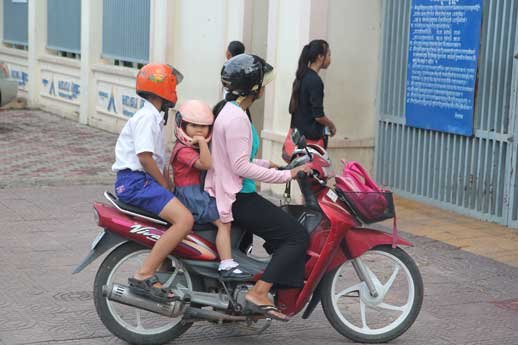
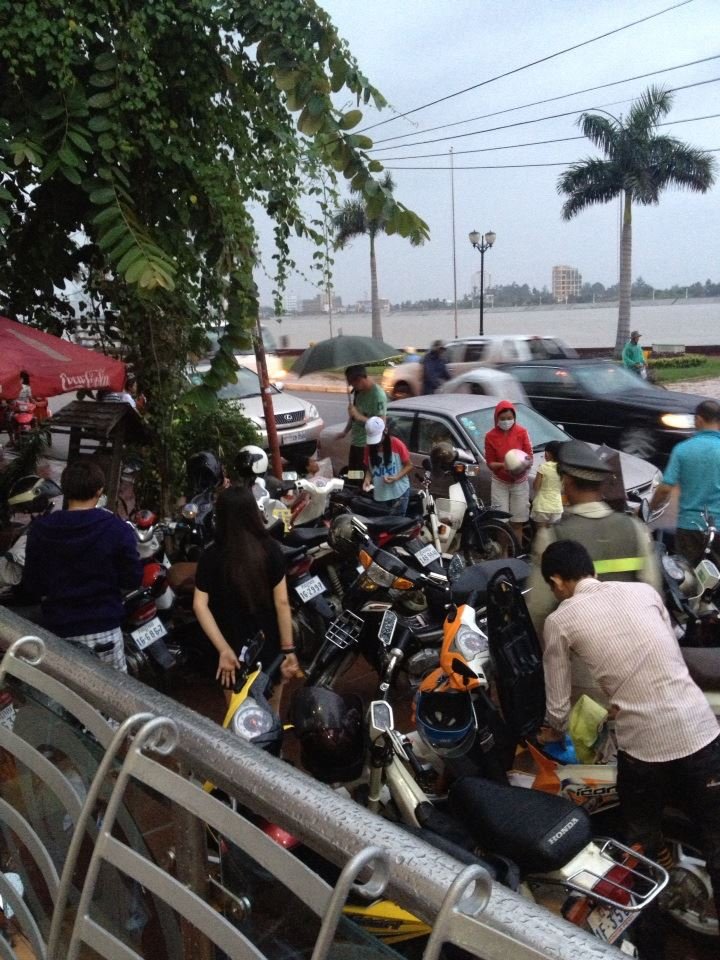
Those of you who have travelled through parts of  Asian know how mad, crazy, radical their driving can be.

[vimeo http://www.vimeo.com/54691916 w=500&h=282]
If you haven’t, watch this short video of a normal intersection at 6:30 at night.

At first we described it as ‘Organised Chaos’ and soon realised that it was best described as “Disorganised Order”. Everyone headed were they needed to go, in an orderly yet apparently disorganised way.

The drivers themselves were probably the most fascinating part of the driving experience. They’re a paradox of determination and grace. They wanted to get there first and fast, but were gracious as others pushed and squeezed their Tuk Tuk’s into gaps that moments before didn’t exist.

Disorganised Order,

and

Determination with Grace.

Disorganised Order, you don’t see that much in business or law in New Zealand. I wonder if it isn’t the essence of being truly entrepreneurial.

and

I have met plenty of determined people, and I have the privilege of knowing a lot of gracious people. Sadly, most often the determined people are not characterised by grace.

Determined with Grace, describes the leader I would like to be.

We are all horrendous and beautiful.

As I stood motionless at the Killing Fields, what seemed like millions of tear drops landed on my umbrella. The bleak wet day only added to my somber mood as the horror of humanity played out in my mind. Men, women, boys, girls & babies slaughtered by their fellow countrymen on a scale I will never grasp.

Looking intently at a single skull I am repulsed by humanity. This skull is just one of thousands lining the shelves, that represent up to 1.4 million murder victims in Cambodia. At the height of the killing in Cambodia I was 8 years old and I heard of how boys as young as 11 were conscripted to the Khmer Rouge to become killers. Boys then, who are now men in their forties, murderers.

It is easy to stand divorced from the moment and think we would have behaved differently.

But we all have deceived others. All been deceived.

When faced with the choice of kill, or be killed, few of us really have the strength and courage to choose anything but life.

Humanity at its core is desperately dark.

We are all horrendous.

Yet…

As I traveled Cambodia every person I saw or spoke with was beautiful.

Some had bodies disfigured in ways I have never before seen, but they are beautiful.

Our Tuk Tuk drivers, beautiful.

The beggar and her child, beautiful.

Poor children playing in the water from a good well, beautiful.

Often the stories and circumstances were heart breaking, but the people …

Beautiful.

Only senior officials of the Khmer Rouge will be brought to justice, which means tens of thousands of murderers now live ordinary lives in Cambodia. Is it possible I met some of these killers and thought they were beautiful? Yes, and I now understand that in the right circumstance we are all capable of the horror of the Khmer Rouge. (That doesn’t make it right.)

You are capable of these things.

You are horrendous.

Yet I just think … you are beautiful.


Lesson 4 from Cambodia visit 2012: We are all capable of horrendous things and we are all beautiful people.

One reason why education in New Zealand is fantastic!

Imagine a 10-year-old student you have known. Now pause, and think about their schooling and what they have really learnt at the age of 10.

Consider how little they really know in mathematics and english.

Their drawing is good, but they are no designer.

They have creativity but their cognitive skills are lacking.

Now, imagine the 10-year-old finishing school for good. Then you discover they have no access to books or libraries or the internet and you realise the child’s lifetime intellectual learning is over.

Gone is the opportunity to learn more about science or maths or design or art. Gone is the opportunity to seek a University degree.

I have just described the average student in Cambodia. Most rural children have access to a basic primary education, at which point the distance and cost increase to attend high school is so great, that the children finish school and start working on the family rice fields.

If most people you knew finished school at 10, how much opportunity to develop, invent and improve would your community have?

How much opportunity would exist to improve the efficiency and productivity of your family land?

At a very basic level, how much opportunity would you have to improve water quality, sanitation and health, if your education finished at 10?

The unfortunate answer is at best, ‘very little!

As I toured rural Cambodia recently and heard that most children finish school at the age of 10, all I could think about was my 10-year-old daughter finishing school at the end of this year. She is smart and has learnt heaps, but hasn’t yet learnt anywhere near enough for a lifetime. And if her access to books and teachers and even the internet disappeared, her future learning would be unthinkably limited.

As I thought of the implication of finishing school at 10, I realised how incredibly blessed we are to have the education and resources on offer in New Zealand.

It offers our children a lifetime of learning.

It means our children’s children will learn even more, and develop more cure’s and create more truly great things.

Education offers hope for our future!

Oh, and the one reason I think education in NZ is fantastic? Because my children continue in school until at least 16 and even then their opportunities aren’t limited. Too often we forget that.


Lesson 3 from Cambodia visit 2012: Education is pivotal for the future of communities

So the water that comes from the Well is not 100% pure?

Mid sentence Jim exhaled an audible groan and instantly we burst into uncontrolled laughter. The groan just reflected the thoughts echoing in our heads as we bounced, banged and rocked our way along the red clay road in a remote rural area of Cambodia. Our hosts were taking us, no, bouncing us to a village where BioSand Filters where in production.

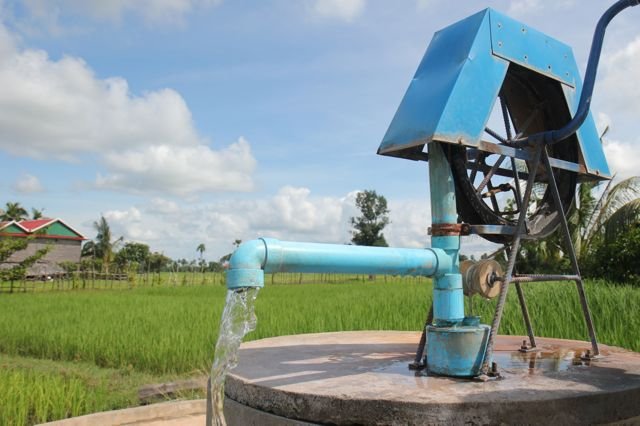
We had come to Cambodia to see the good.water wells that Good Trust had funded and our partners Samaritans Purse have installed. Once at the communities we saw the wells, turned the handles to pump water, took photos and asked questions. It was incredibly satisfying to see clean water pouring from a hand pump on a well that we had enabled. Yet after watching them pump water, they promptly poured it into these bizarre looking concrete containers that trickled forth clean drinking water.

To be honest, before seeing Bio-Sand Filters (BSFs) in action I had not appreciated the importance they played in providing clean water. I very naively thought that we put a Well in, and the water was fresh and ready to drink. It is close, and infinitely better than drinking brown dirty water directly from the rice fields, which is what they did before, however when the water is filtered through a BSF is is 99% free of the germs and ugly stuff that causes sickness.

They are awesome!

Once we arrived at the village where BSFs were being built, we saw how actively involved the community was in constructing them. SP provided the molds and materials, and the people set about building almost a 100 BSFs for each home in the area. BSFs are very low maintenance and last up to 15 years. (If you want to know more about how BSFs work click here).

And the cost of the materials to provide clean water to a household for 15 years?

$30 !

Personally what struck me most as I left the communities we visited was not that they had clean water, but rather how incredibly fortunate we are.

To get clean water they hand-pump water, carry it back to their home and pour it through a BSF. I on the other hand not only shower in drinking water at the turn of a tap, but water my lawns with drinking water in the summer.

And, for the price of feeding my family of 5 takeaways on the odd occasion, I could provide a family with clean water for 15 years!


Lesson 2 from Cambodia visit 2012: Bio Sand Filters are awesome value and worth the investment.

2 tips for being more generous and compassionate.

On a wet humid evening we sat outside on the bustling street corner, in the heart of the action, waiting to enjoy our meal. The restaurant we chose, our clothes and the colour of our skin screamed to the locals that we were wealthy foreigners to Phnom Penh, and almost immediately we were confronted with invitations to purchase or give. Girls the age of my daughters selling bags, young men selling books and a Mother with a young child simply begging. At first we engaged with them, then quickly learnt it was easier to ignore them and their need.

Later as we meandered along the streets we saw a young child (12 – 18 months) standing on the footpath. I glanced down to see her mother bent over a rubbish bag scavenging for food. As I walked past I realised it was the women who had begged from us at dinner. The woman and child I had ignored. I returned and gave her some money, she thanked me, and went back to scavenging in the rubbish.

I learnt some lessons that evening, learnings that have implications beyond the poverty encountered in Cambodia.

We must be prepared to give:
When I hit Cambodia I hadn’t formed this thinking, which meant each situation I encountered required me to make yes/no decisions. Soon the answer just becomes NO.

You can’t fix everything you see, so being prepared means having the forethought to know what you believe in giving to, and how much. And to whom.

This applies equally back home. Knowing what we will give to, helps when people knock on the door or telemarketers call. Importantly knowing what you believe in giving to, means you will give. If you’re not prepared the answer quickly becomes NO.

We must be ready to give:
If being prepared is a state of mind, then being ready is practical. For us it meant having small amounts of money available for donations. Whether running in the morning or on a Tuk Tuk, we had money to give without hesitation to make a small difference.

At home, I barely ever carry money, and therefore it is significantly harder for me to give without hesitation to make a small immediate difference.

I know a lot of people like me have a heart to give, to be compassionate and yet miss opportunities. So may you prepare your hearts to know when and how you will give. And then may you be ready to give without hesitation.

May you encounter the joy of making a difference.


Lesson 1 from Cambodia visit 2012: Being prepared to give.
« Older posts Newer posts »